Property Inspection Platform — A Case Study
How WhizCloud helped a property inspection organisation go fully digital and process 150,000+ inspections
TL;DR
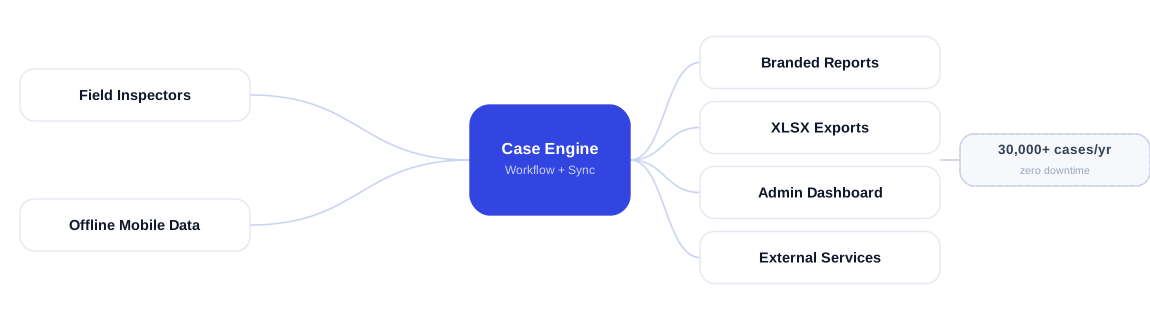
We built a full-stack digital property inspection platform for a Danish inspection organisation, launched in 2017 and continuously evolved over 7+ years. The platform covers the entire property workflow lifecycle — from initial analysis to final handover — with near 100% paperless operations. Using React Native, Node.js, PHP, MySQL, and AWS, we delivered an offline-first mobile app, dynamic branding tools, automated reporting, centralised case management, and a legacy system rescue. The result: 150,000+ inspection cases processed, 30,000+ cases annually, zero downtime during peak operations, and a long-term partnership that continues to grow.

Problem Overview
Before the platform transformation, field operations were fragmented, paper-heavy, and impossible to scale. Inspectors worked with isolated tools and paper forms, with no real-time visibility, no offline capability in rural areas, and no centralised way to manage bookings or track activity.
- Inspectors relied on paper forms and isolated tools — causing synchronisation problems and data loss
- No internet in rural areas left field staff entirely dependent on manual paperwork
- No real-time visibility into task status — difficult to track who did what and when
- No centralised system to manage bookings, workflows, or inspection logic
- No customer-specific branding on inspection products and reports
Role & Responsibilities
- Role: Full-stack development team and long-term technology partner
- Responsibilities:
- Design and build the full property inspection platform end-to-end
- Develop an offline-first mobile app for field inspectors
- Build dynamic branding, template configuration, and workflow tools
- Create centralised case management, booking, and role-based access systems
- Automate report generation, customer insights, and XLSX exports
- Audit, optimise, and maintain the existing legacy PHP system
- Integrate external services — BoligDok, DAWA, Flipsnack, LaserTryk, Google Vision, and AI
Project Context
- Timeline: 2017 — ongoing (7+ years)
- Team: Dedicated cross-functional team — mobile, frontend, backend, DevOps, QA, project lead
- Purpose: End-to-end digital transformation covering condition reports, energy labels, digital magazines, electrical inspections, and handover documentation for residential and commercial properties
- Constraints: Offline field operations in rural areas, legacy PHP system requiring rescue, multi-customer branding requirements, high and growing inspection volumes
My Approach
We mapped the full inspection lifecycle — new case → assign → book consultant → on-ground inspection → generate products → review → deliver → close — and identified every point where paper or disconnected tools created friction. Legacy system obligations were handled in parallel to ensure business continuity throughout the transition.
- Discovery: Mapped every workflow step for both field inspectors and admin teams before designing anything
- Field-first design: Offline capability was a core requirement from day one, not an afterthought
- Legacy audit: Took over the existing PHP system and implemented targeted optimisations alongside new platform development
- Iterative delivery: Weekly sprints with a dedicated project lead kept communication clear and development aligned

Research & Insights
Key Findings from Discovery
- Field inspectors needed fully offline capability with automatic sync — no workarounds accepted
- Customers expected their own branding on every report and product — generic templates were commercially unacceptable
- Admins needed to configure workflows and rules without involving developers each time
- Repeat property inspections wasted time re-entering data that already existed in the system
- No single view of booked cases, inspector workload, or upcoming assignments — management had no visibility
Competitive Research
- Most inspection platforms were single-feature tools — not end-to-end workflow systems
- Offline-capable mobile apps with automatic sync and zero data loss were rare in the market
- Per-customer dynamic branding — fonts, colours, logos, templates — was not offered by any direct competitor
User Persona
- Name: Mikkel
- Role: Field inspector, works across urban and rural properties
- Goals: Complete inspections accurately anywhere, capture structured data and photos, sync without data loss
- Pain Points: No internet in rural areas, paper forms lost or damaged, no way to link photos directly to cases

Information Architecture
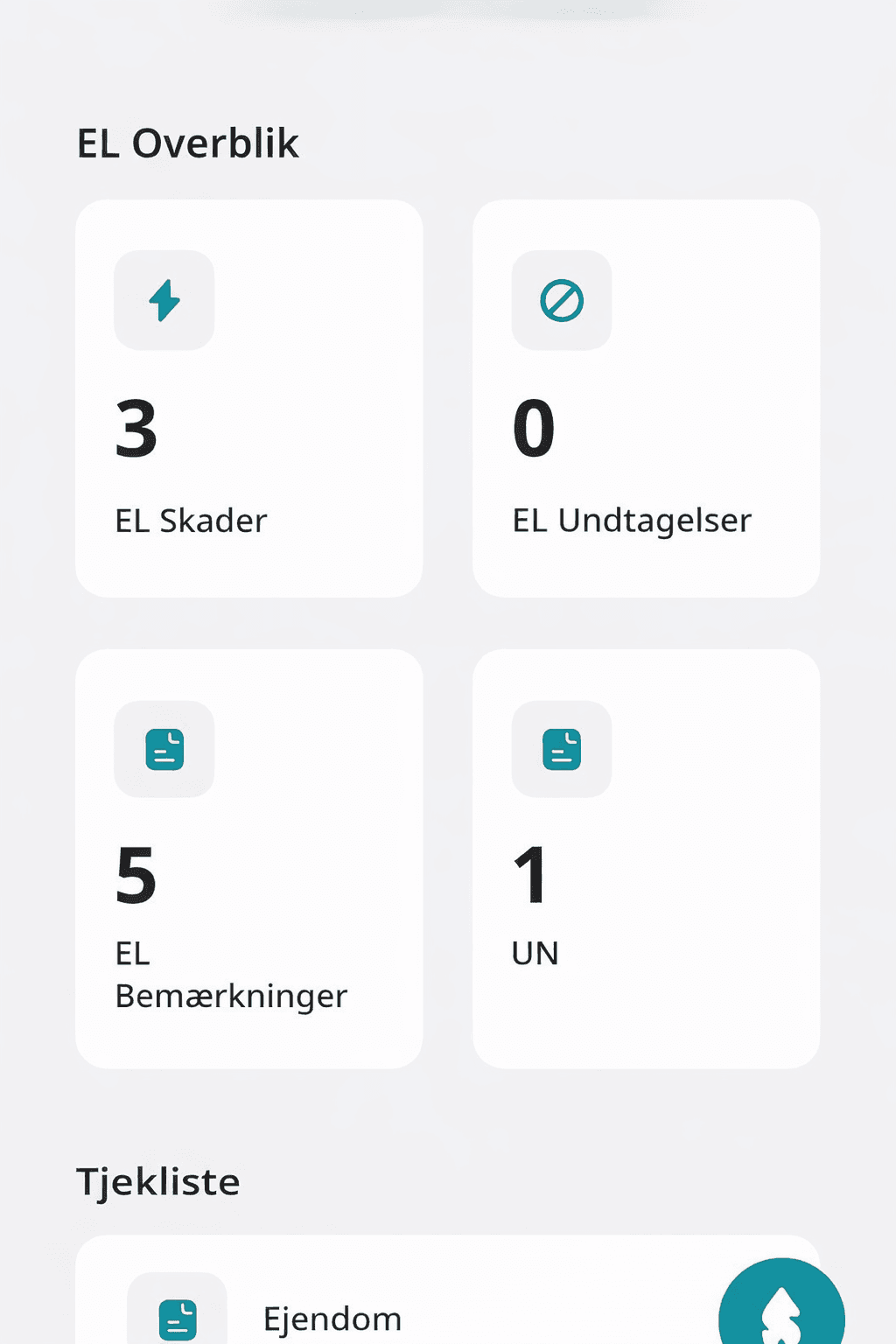
- Admin Dashboard — centralised operations view, daily activity, order tracking, and customer stats in real time
- Case Management — inspector assignments, workload monitoring, and upcoming case pipeline in one place
- Dynamic Workflow Engine — admin-configurable inspection logic and business rules, no developer involvement needed
- Branding Configuration — per-customer fonts, colours, logos, and template layouts end-to-end
- Product Templates — editable condition reports, magazines, and energy labels with live preview
- Offline Mobile App — data capture, photos, and form inputs in any location, auto-sync on reconnect
- Notification Layer — Mandrill for email, Slack for operational alerts, SMS for customer-preference-based communication
Visual Language
The platform serves two very different users — field inspectors on mobile in varying conditions, and admins managing high volumes of data at a desk. The mobile UI was kept minimal and form-driven, optimised for fast photo capture. The admin interface prioritised density and control — dashboards and configuration panels designed for power users managing hundreds of cases daily.
Wireframes & Early Ideas
Early wireframes focused on the inspection capture flow on mobile and the case management dashboard on admin. A key decision was to make the offline/online state invisible to the inspector — the app behaves identically either way and syncs silently in the background. The branding configuration tool went through multiple iterations to make complex per-customer customisation feel approachable for non-technical users.
Designing Solutions
Problem: Inspectors had no way to work in areas without internet connectivity
- Built an offline-first React Native mobile app — full functionality regardless of connectivity
- Data, photos, and notes sync automatically and silently the moment a connection is available — zero data loss
- Photo capture linked directly to cases via structured form inputs, ensuring complete traceability

Problem: No customer-specific branding on inspection products and reports
- Fully dynamic branding configuration — fonts, colours, logos, and layouts customisable per customer end-to-end
- Editable product templates let customers preview and adjust condition reports and magazines directly in the platform
- Flipsnack converts PDF magazines into interactive digital flipbooks; LaserTryk enables printed hard copy delivery
Problem: No centralised visibility into bookings, inspector load, or case status
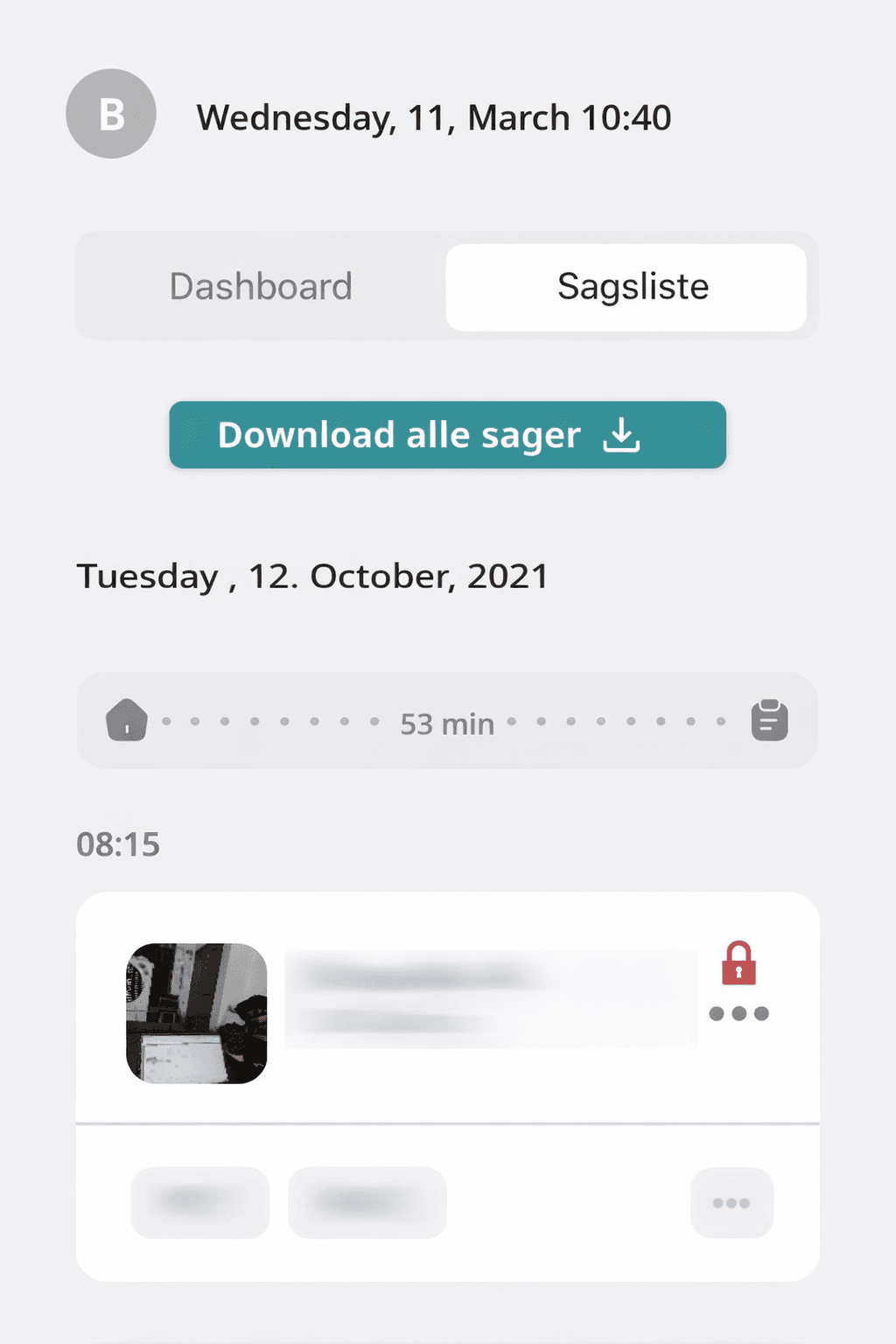
- Centralised case management shows every inspector's booking, assigned property, and workload in one view
- Role-based access and real-time activity tracking record every action — resolving disputes and audits instantly
- Smart data reuse pre-populates historical data for repeat property inspections, eliminating redundant entry
Problem: Legacy PHP system unable to handle growing inspection volumes
- Audited the existing architecture and implemented targeted fixes — database query restructuring, memory control, and backend improvements
- Legacy platform now supports 30,000+ cases annually with zero downtime during peak operations
- Fully integrated with external services and the new platform as one unified system
Tech & Implementation
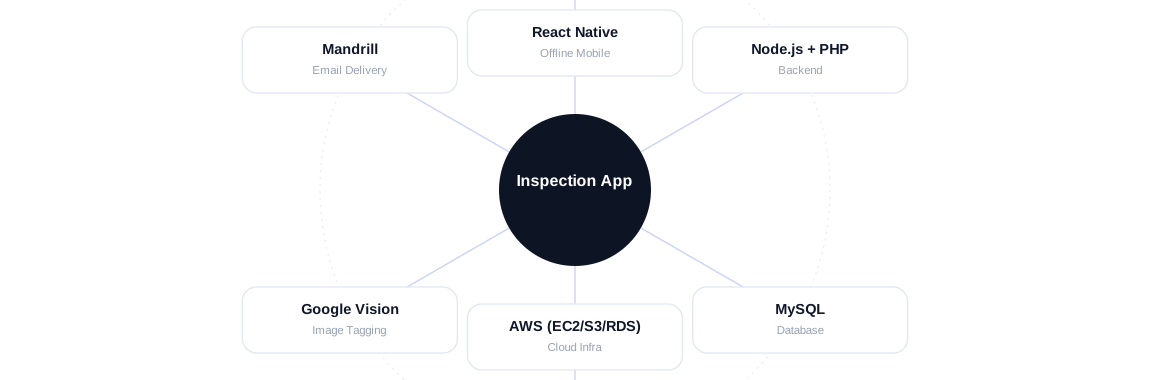
- Frontend: React Native (mobile), Next.js, Bootstrap, jQuery — responsive and field-ready across mobile and web
- Backend: PHP, Node.js with Express, MySQL, REST APIs — stable for business logic; fast for real-time search and messaging
- Authentication: OAuth for centralised login; token-based API security throughout
- Hosting: AWS (EC2, ECS, RDS, S3) — scalable, high-availability infrastructure with auto-scaling during peak loads
- Monitoring: Rollbar for error logging; New Relic for server load and CPU alerts; Slack for high-priority notifications with responsible person tagging
- Communication: Mandrill for custom-template email delivery; Slack for operational alerts; SMS for customer-preference-based notifications
- External Services: BoligDok (case registration), DAWA (government property metadata), Flipsnack (digital flipbooks), LaserTryk (printed delivery), Google Vision (image tagging), AI prompt (magazine text generation)
- Utilities: mPDF for PDF generation; image compression for resize/crop/opacity; custom chart creator for case volume and growth views
- Deployment: Git-based CI/CD with automated release management and rollback safety
Real-world Features & Highlights
- Offline-first mobile app → inspectors work anywhere, data syncs automatically on reconnect
- Dynamic branding → full per-customer customisation of every report, magazine, and product output
- Centralised case management → all inspector bookings, workloads, and assignments in one view
- Admin-configurable workflows → business logic updated by admins, no developers needed
- Smart data reuse → historical data pre-populated for repeat properties, eliminating redundant entry
- Automated XLSX reporting → monthly customer insights, repeat engagement tracking, market segment targeting
- AI-assisted magazine text → creative property descriptions generated from inspection files automatically
- Legacy system rescue → existing PHP platform scaled to 30,000+ cases annually with zero downtime
Results & Impact
- 150,000+ inspection cases processed across residential and commercial properties since 2017
- Near 100% paperless workflows — paper forms, manual coordination, and isolated tools eliminated entirely
- Legacy PHP platform stabilised to support 30,000+ cases annually with zero downtime during peak operations
- Rural and remote inspections no longer a limitation — offline app adoption increased significantly across field teams
- Admins configure workflows and branding independently — no developer bottleneck on business logic changes
- 7+ year ongoing partnership — the same team continues to extend and evolve the platform year after year

Challenges & Learnings
- Offline reliability — edge cases like conflicting data and partial syncs required careful conflict resolution logic and thorough field testing
- Legacy system under pressure — taking over a live PHP platform required an audit-first approach; optimise before touching anything structural
- Branding at scale — per-customer font systems, colour palettes, and layouts across dozens of product types demanded a flexible template engine, not just a settings panel
- Admin empowerment vs. stability — giving admins workflow control introduced risk; guardrails and preview modes were essential to prevent configuration errors in live cases
- External service dependency — with 10+ integrations, graceful degradation had to be designed in from the start

Takeaways
- Deep domain understanding drives relevant solutions: Understanding on-site realities — rural areas, paper forms, sync chaos — shaped the entire architecture; generic patterns would have missed the most critical requirements
- Offline-first is a field readiness decision: Prioritising offline capability transformed inspector adoption — the app became something field staff trusted, not worked around
- Legacy tech, modern performance: WhizCloud didn't just build new — we rescued and scaled an older system, proving modernisation and continuity can happen in parallel
- Automation boosted productivity: From report generation to branded template management, automation cut paperwork by over 90% and improved traceability across every case
- Strong communication sustains long partnerships: A dedicated project lead, transparent timelines, and proactive updates kept a 7+ year engagement productive — the client sees WhizCloud as an extension of their own team
Next Steps
- AI-powered property description generation from property-inspection-captured photos
- Advanced centralised tracking dashboard across all systems and case types
- Additional microservices to improve modularity and system resilience
- Expanded offline app with multi-language support for international workflows
- Support for upcoming products currently in the pipeline
Client Feedback
"Partnering with WhizCloud has been a key factor in our ability to deliver a modern, scalable platform for municipal field services. Their team took the time to understand the operational realities of our sector and translated that into practical, user-friendly technology. They've helped us integrate critical systems, streamline case workflows, and develop smart features that directly support our users in the field. What we value most is their ability to communicate clearly, respond quickly, and work alongside us like a true partner — not just an outsourced vendor. WhizCloud has made complex development feel simple, even for a non-technical team like ours. We see them as an extension of our own team and look forward to continuing this strong, productive collaboration."
— Property Inspection Organisation, Denmark

Call to Action
If you're looking to digitise complex field operations or build a scalable inspection management platform, contact us at WhizCloud — we'd love to partner with you.
Contact Us