
Automating question generation and answer evaluation for smarter classrooms.
An AI-powered education platform that helps teachers generate question papers from study materials and evaluate handwritten answers — using Next.js, NestJS, Ollama, and ChromaDB to cut prep time and speed up grading.
Exam prep and grading no longer scaled with class size.
Teachers spent hours writing papers and marking handwritten answers by hand — work that was repetitive, inconsistent, and increasingly unsustainable as student numbers grew.
Slow question paper creation
Building balanced papers from study material took 4–6 hours per subject.
Manual handwritten grading
Evaluating written answers was tedious, delayed feedback, and invited inconsistency.
Weak EdTech support for handwriting
Existing tools rarely handled handwritten submissions with teacher override.
No class-level analytics
Institutions lacked clear reporting across students, subjects, and performance trends.
Client
EdTech innovation client
Industry
Education & EdTech
Integrations
Ollama · ChromaDB · OAuth
Engagement
10-week paid client project
What we learned before we designed anything
Teacher interviews and workflow mapping shaped every product decision — from PDF ingestion to override controls on AI scores.
Paper generation eats half a day
Teachers routinely spend 4–6 hours per subject building balanced question papers.
Teachers need control, not autopilot
Educators wanted to edit AI questions and override AI grading decisions.
Handwriting is the missing piece
Most EdTech tools skip handwritten evaluation — the exact pain in real classrooms.
Institutions need analytics
Schools asked for class- and subject-level reporting, not just per-exam scores.
Assistive AI adopts faster
Teachers preferred gradual AI adoption — assistive workflows beat fully autonomous ones.
Limited handwriting support
Many EdTech platforms ignore handwritten submissions or offer weak evaluation flows.
Black-box AI outputs
Tools that generate content without easy edit/override lose teacher trust quickly.
Thin institutional reporting
Few products deliver actionable analytics across class, subject, and student cohorts.
Priya Sharma
High school science teacher
Goals
- • Save time preparing papers
- • Grade faster with fair results
- • Get analytics for student performance
Pain Points
- • Manual grading workload
- • Repetitive paper preparation
- • Lack of tools for handwritten answers
Study material in, exams and analytics out.
PDFs and books flow through semantic search and LLM generation into editable papers, OCR-assisted evaluation, and institution-ready reports — with OAuth and role-based teacher/admin portals.
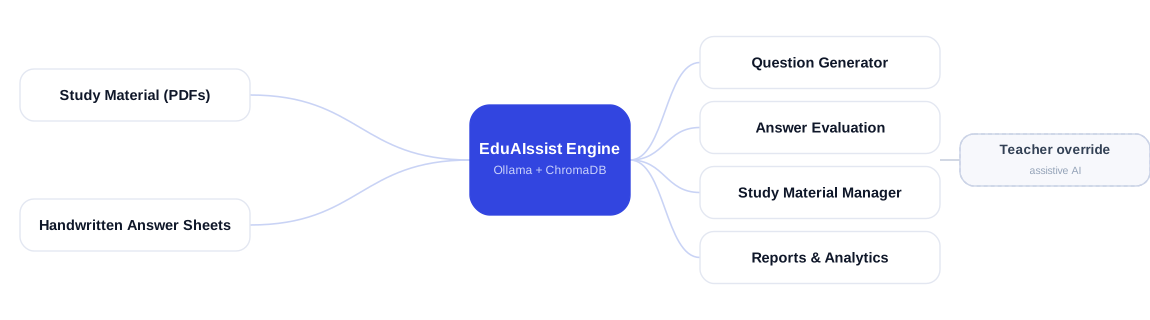
One education assistant, built around teacher control.
Every module keeps teachers in the loop — AI does the heavy lifting, educators refine and override.
Teachers built papers manually from large volumes of study material — slow and hard to balance.
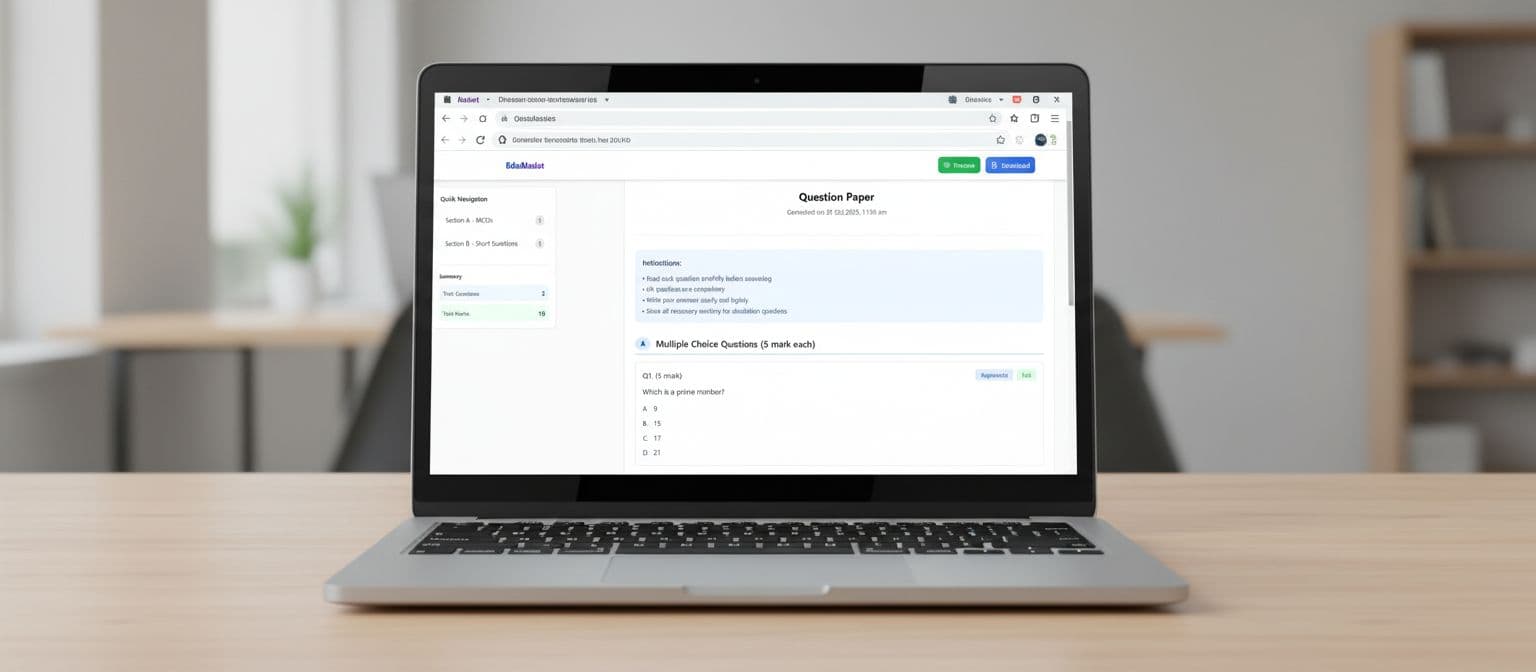
Upload material, generate, edit, export
- ✓Ollama + ChromaDB generate questions from semantic embeddings of uploaded PDFs and books
- ✓Teachers preview, edit, or regenerate sections, then export print-ready PDFs
Handwritten answers were graded inconsistently with little transparency into scoring.
AI-assisted scoring with teacher override
- ✓OCR + embeddings suggest marks with confidence scores
- ✓Teachers correct and adjust scores before finalizing results
Finding the right chapter content across books meant manual searching and guesswork.
Semantic search across the library
- ✓Upload books, chapters, and PDFs into a searchable knowledge base
- ✓ChromaDB retrieves relevant content instantly for generation and review
Institutions lacked visibility into performance beyond individual exam marks.
Class and subject insights on demand
- ✓Auto-generated analytics by student, class, and subject
- ✓Export-ready views for teachers and administration
Built for teacher-friendly AI workflows.
Every layer chosen to keep LLM generation, semantic search, and grading assistive — not opaque — with institution-ready auth and storage.
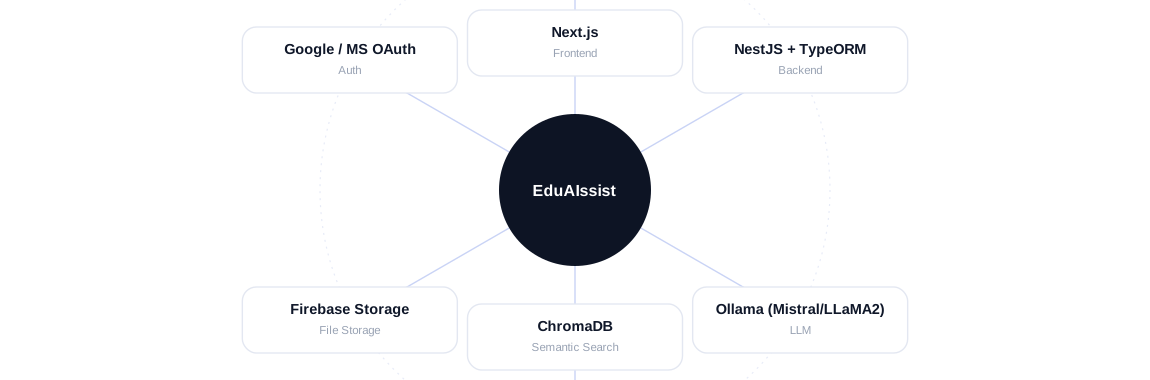
Discovery first, then AI into teacher workflows.
Agile 2-week sprints moved from teacher interviews to dashboards, Ollama integration, and prompt refinement on sample student data.
Discovery & research
Interviewed teachers, reviewed EdTech tools, and mapped paper-prep and grading workflows end to end.
Design & prototyping
Wireframed teacher dashboards, exam flows, and AI evaluation screens with preview + edit paths.
AI implementation
Integrated Ollama for question generation and ChromaDB for semantic search over ingested PDFs.
Evaluation & override
Built handwritten scoring with confidence display and teacher override as a first-class control.
Pilot & refine
Tested with sample student data, tightened prompts, and shipped auth, portals, and documentation.
What teachers use every exam cycle
What changed after launch
80% less time preparing exams - AI question generation cut the hours teachers spent assembling balanced papers.
3x faster grading - AI-assisted evaluation with override accelerated handwritten marking versus pure manual review.
70% savings on prep workflows - Question generation alone removed most of the repetitive assembly work before exams.
Teachers kept control of AI - Feedback highlighted the sweet spot: AI does the heavy lifting, teachers refine the output.
New institutional analytics - Schools gained student and class performance views that were not practical before.
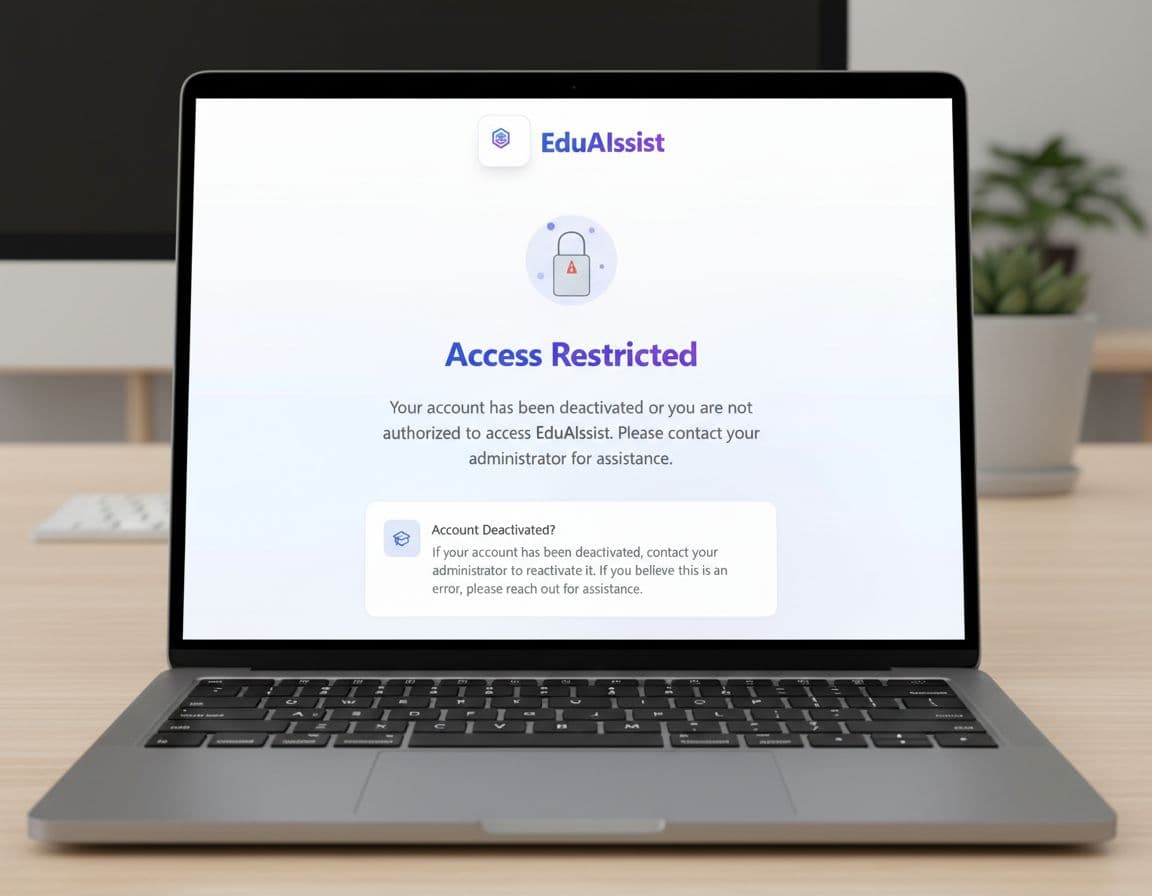
Role-based portals shipped - Admin and teacher access, OAuth login, and material management landed in one coherent product.
Challenges & Learnings
OCR accuracy
Handwriting variability made evaluation tricky — confidence scores and overrides were essential.
Prompt engineering
Structured prompts and fallbacks were required to keep generated questions reliable.
User adoption
Teachers preferred assistive AI over fully autonomous grading and generation.
AI + human override
The EdTech sweet spot is collaboration: automation with educator final say.
Semantic retrieval quality
PDF ingestion and embeddings had to be tuned so generation stayed grounded in the right chapters.
Where the platform goes from here
AI does the heavy lifting, I refine — that control made the difference for our exam workflow.
“EduAIssist helped our teachers cut paper prep and grade handwritten work faster while staying in charge of every AI decision. The analytics finally gave the institution a clear view of class performance.”