
Turning ERP XML chaos into an analytics-ready cloud data lake.
A scalable ETL pipeline that extracts complex XML from enterprise ERP systems, parses deeply nested structures, and transforms them into structured, analytics-ready formats in a cloud data lake — enabling reporting, dashboards, and future AI insights.
Critical ERP data was locked in unusable XML.
Enterprise ERP systems held the operational truth — but it lived only as deeply nested XML that analysts could not query, scale, or trust for modern analytics.
XML-only data access
Operational data was available only in complex, nested XML formats from ERP APIs.
No analytics-ready output
Nothing downstream could consume the data without manual transformation or fragile scripts.
Manual, error-prone extraction
Teams relied on hand-built pulls and one-off scripts that broke as schemas drifted.
Limited scalability
Large volumes and inconsistent structures made continuous processing unreliable.
Client
Enterprise logistics / ERP data
Industry
Logistics & supply chain data
Integrations
ERP APIs · AWS S3 · Cron
Engagement
Pipeline design to production
What we learned before we designed anything
Findings from analysts and data teams who needed ERP data for reporting — the basis for every parsing and storage decision that followed.
ERP holds the value, XML blocks it
Systems store critical operational data, but non-analytics-friendly formats keep it out of reach.
Nesting is the real barrier
Deeply nested and repeating XML nodes defeat basic extractors and spreadsheet workflows.
Manual pulls do not scale
Hand extraction is slow, inconsistent, and breaks as volumes and schema variants grow.
Organizations lack continuous pipelines
Teams need scheduled, fault-tolerant ingestion — not one-off export jobs.
Structure unlocks decisions
Reliable, normalized datasets are the prerequisite for dashboards, reporting, and AI.
Extract without transform
Most tools pull XML but stop short of deep nesting handling and schema normalization.
Weak cloud scale story
Limited support for raw-plus-processed data lake layers with versioning and traceability.
No analytics-ready path
Few solutions deliver a structured pipeline ready for BI and downstream AI use cases.
Sarah
Data Analyst · Enterprise Operations
Goals
- • Access structured ERP data for analytics
- • Reliable datasets without manual XML work
- • Faster reporting and decision support
Pain Points
- • Complex nested XML
- • Manual processing every cycle
- • No trustworthy analytics-ready datasets
One pipeline from ERP XML to a consumable data lake.
Extraction, ingestion, parsing, transformation, storage, and consumption form a single flow so analytics always read from structured layers — not raw XML dumps.
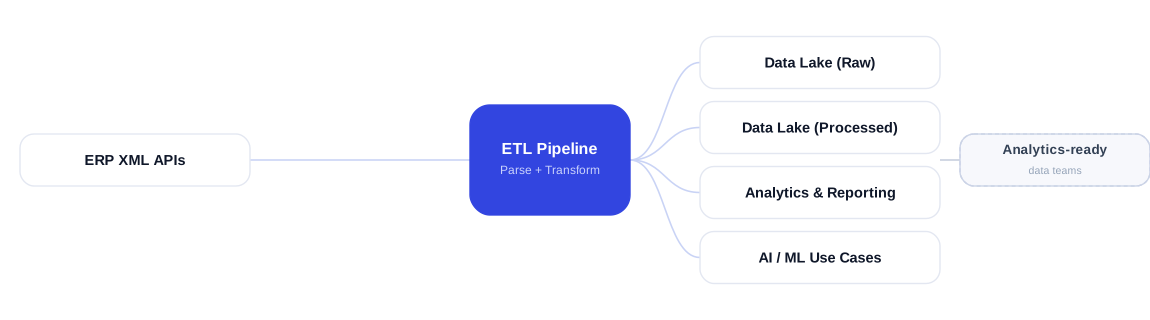
Pipeline-first: parse, normalize, store, then consume.
Every stage turns inconsistent ERP XML into reliable structured data — with scheduling, retries, and dual raw/processed lake layers.
XML fetched ad hoc from ERP APIs with no reliable scheduling or queue discipline.
Automated pulls that keep running
- ✓ERP API extraction with scheduled and incremental ingestion
- ✓Queue-aware intake so large batches do not stall the pipeline
Deeply nested and repeating XML nodes defeated fragile parsers and one-off scripts.
Schema-aware XML that survives complexity
- ✓Custom parsers built for nesting, repeating nodes, and structural variance
- ✓Flexible logic that tolerates inconsistent ERP outputs without silent data loss
Inconsistent structures meant every report required its own cleanup path.
Normalization into analytics-ready JSON
- ✓Schema normalization that standardizes fields across ERP variants
- ✓Structured outputs ready for dashboards, reporting, and AI features
No scalable storage pattern for raw retention, processed consumption, or traceability.
Raw and processed layers on AWS S3
- ✓Cloud data lake with versioning, raw retention, and processed consumption layers
- ✓Fault tolerance, retries, and logging so processing stays continuous and auditable
Built for continuous enterprise data movement.
Every layer chosen to keep high-volume ERP XML moving into a reliable lake without blocking analytics consumers.
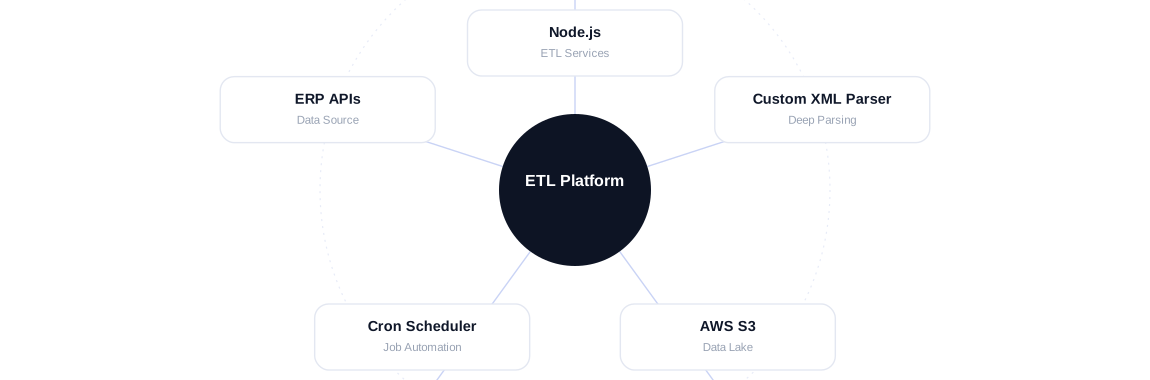
Pipeline first, analytics second.
Reliable extraction and transformation were treated as the prerequisite for every dashboard and insight that followed.
Discovery
Mapped ERP XML sources, nesting patterns, and analyst consumption needs before designing the pipeline.
Pipeline-first architecture
Designed the full ETL flow — extract, ingest, parse, transform, store — before any analytics UI work.
Schema-aware parsing
Built custom XML parsers and normalization logic for inconsistent, deeply nested ERP payloads.
Cloud lake & automation
Deployed AWS S3 raw/processed layers with cron scheduling, retries, monitoring, and fault tolerance.
Consumption readiness
Enabled structured datasets for reporting, dashboards, and future AI/ML integrations.
What analysts get once the lake is live
What changed after launch
Manual extraction eliminated - Automated ingestion replaced hand pulls and fragile one-off scripts.
Faster analytics readiness - Structured datasets became available on a reliable schedule instead of after days of cleanup.
Improved reliability and consistency - Normalization and fault-tolerant processing reduced broken reports and silent schema drift.
Scalable continuous processing - The pipeline handles large volumes with incremental updates rather than full manual refreshes.
Foundation for AI and BI - Analytics-ready lake layers unlocked dashboards, reporting, and future model training.
Challenges & Learnings
Inconsistent XML shapes
Flexible parsing was required for nesting variance across ERP exports.
Performance vs. accuracy
Large datasets demanded careful trade-offs without losing transformation fidelity.
Distributed fault tolerance
Retries, logging, and monitoring had to be designed in from day one.
Long-term lake design
Raw vs. processed layering with versioning enabled growth without rework.
Where the platform goes from here
This ETL pipeline unlocked the true value of our ERP data. What was once difficult to access is now structured, reliable, and ready for analytics.
“It has significantly improved our decision-making capabilities — turning locked ERP XML into a dependable foundation for reporting and insight.”