
Ensuring safety in real time on active construction sites.
A computer vision platform that uses live video feeds and YOLOv8 to detect safety violations on construction sites — delivering real-time alerts, dashboards, and analytics for safety officers and site supervisors.
Safety checks were manual, infrequent, and reactive.
Construction sites are dynamic hazard zones — workers may skip PPE, enter danger zones, or ignore protocols. Traditional inspections miss violations as they happen.
Manual, periodic inspections
Safety checks relied on infrequent walkthroughs instead of continuous oversight.
Missed PPE and proximity risks
Workers skipping required gear or entering danger zones often went unnoticed until after the fact.
No real-time alerts
Violations were caught late — or not at all — with no immediate mobile or web notification path.
Hard to review incidents
Supervisors lacked a clear way to replay footage, timestamp violations, and compile compliance reports.
Client
Internal AI competition / PoC
Industry
Construction & site safety
Integrations
Live cameras · YOLOv8 · WebSockets
Engagement
4–6 week proof of concept
What we learned before we designed anything
Findings from safety officers, supervisors, and operators — the basis for every detection threshold and alert flow that followed.
Alerts must arrive immediately
Safety officers need push notifications on mobile and web the moment a violation is detected.
History matters as much as live
Supervisors want trend views and the ability to review recorded video with time-stamped incidents.
False positives destroy trust
Operators ignore systems that cry wolf — sensitivity and confidence scoring had to be first-class.
PPE + proximity in one place
Few tools combine PPE detection, zone proximity, and real-time alerts in a single workflow.
Analytics must summarize video
Long streams need concise dashboards — not another pile of raw footage to scrub through.
Most tools react after the fact
Many platforms only alert post-incident or lean on periodic audits instead of continuous monitoring.
Narrow detection coverage
Few products combine PPE detection, proximity hazards, and live alerting in one stack.
Weak video analytics
Existing tools struggle to turn long camera streams into clear, actionable summaries.
Maria
Safety Officer · Construction Site
Goals
- • Catch safety violations immediately
- • Reduce manual inspections
- • Compile clear compliance reports
Pain Points
- • Too many false alarms
- • Difficulty reviewing video incidents
- • Lack of instant alerts
Live video in, real-time alerts and analytics out.
Camera feeds flow through a YOLOv8 detection pipeline into WebSocket alerts, dashboards, and recorded review — with role-based access for officers, supervisors, and admins.
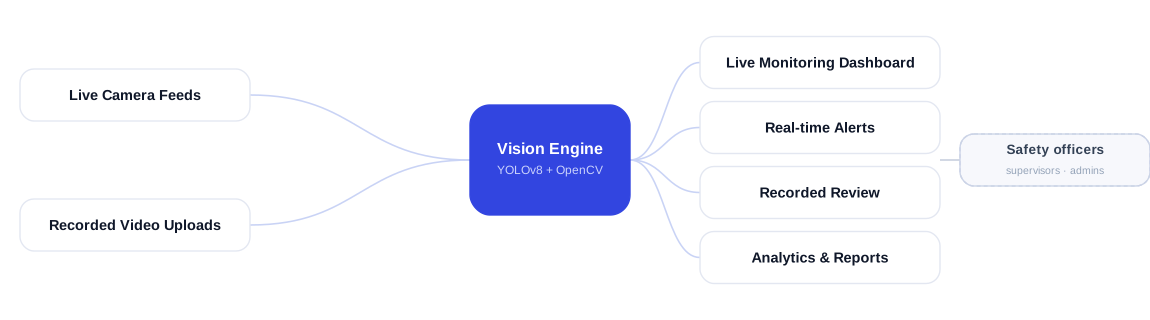
One connected safety platform, built capability by capability.
Every module shares the same detection pipeline so live monitoring, alerts, and incident review all read from one source of truth.
Safety relied on walkthroughs and reactive reports — violations were often missed until it was too late.
Computer vision that watches every feed
- ✓YOLOv8 + OpenCV pipeline for PPE and proximity detection on live and recorded video
- ✓Multi-frame confirmation and confidence levels to cut false positives
No reliable way to notify the right people the moment something went wrong on site.
Alerts that reach officers instantly
- ✓WebSocket-powered notifications for web and mobile workflows
- ✓Severity levels so high-risk events surface first
Multiple cameras and sites created overload with no clear filter or ownership model.
Role-based live oversight
- ✓Dashboards filtered by site, camera, and severity
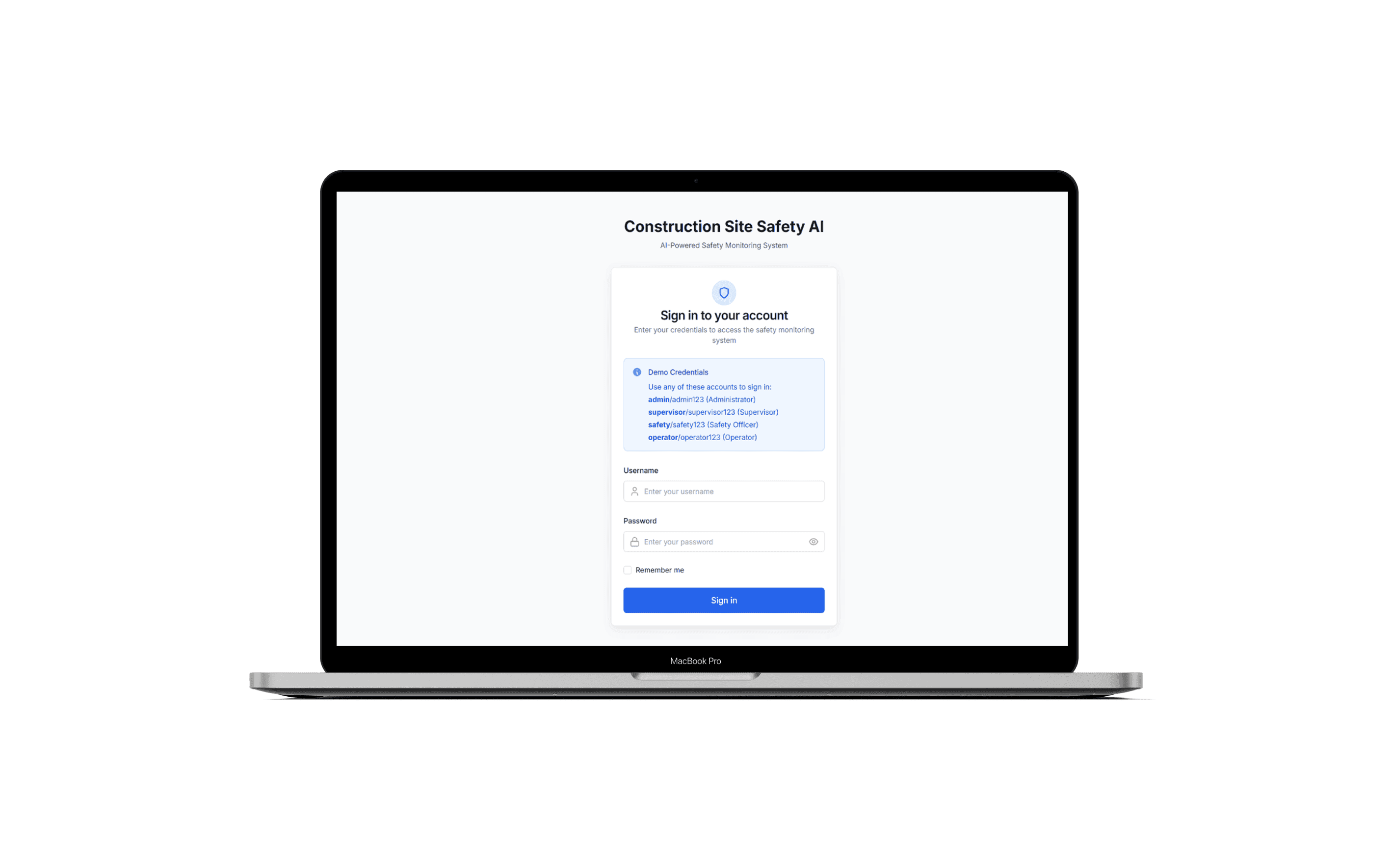
- ✓JWT auth with role-based access for Safety Officer, Supervisor, and Admin
Reviewing incidents meant scrubbing hours of footage with no structure or timestamps.
Timeline review that is actually usable
- ✓Upload and playback with time-stamped alerts and violation thumbnails
- ✓Analytics and reports that summarize risk hotspots across sites
Built for real-time vision on practical hardware.
Every layer chosen to keep live video moving, detections fast, and dashboards responsive — even on standard web cameras.
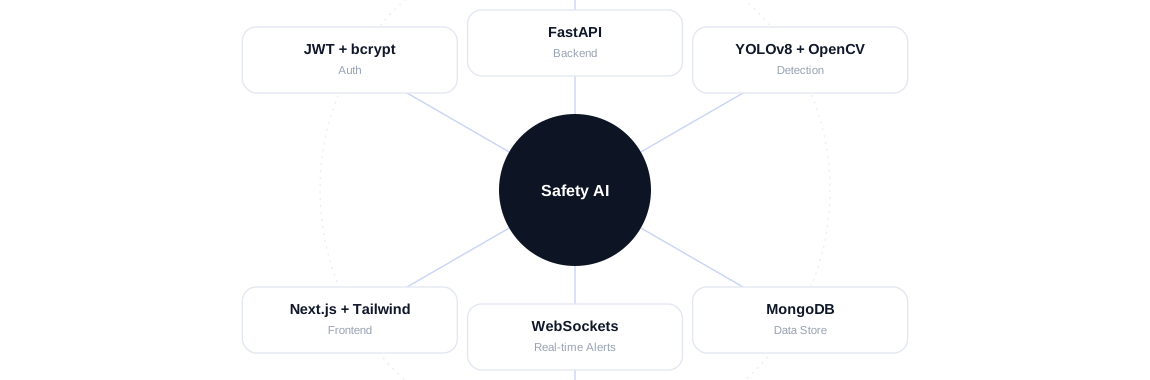
Detection first, then alerts, then review.
We framed the violations and roles first, then prototyped YOLOv8 pipelines and dashboard flows in parallel under a tight competition schedule.
Problem framing
Defined PPE, proximity, and hazard detections, plus the roles that needed alerts — Safety Officer, Supervisor, and Admin.
Detection prototype
Stood up YOLOv8 models with live camera pipelines and fallback upload paths for recorded video.
Dashboard & alert UX
Mapped the officer flow from alert → video → review → resolve/ignore, then refined with Figma prototypes.
Threshold tuning
Iterated detection confidence, multi-frame triggers, and severity levels to balance sensitivity against false positives.
Demo & delivery
Shipped auth, analytics, and a public demo environment using live and recorded video within 4–6 weeks.
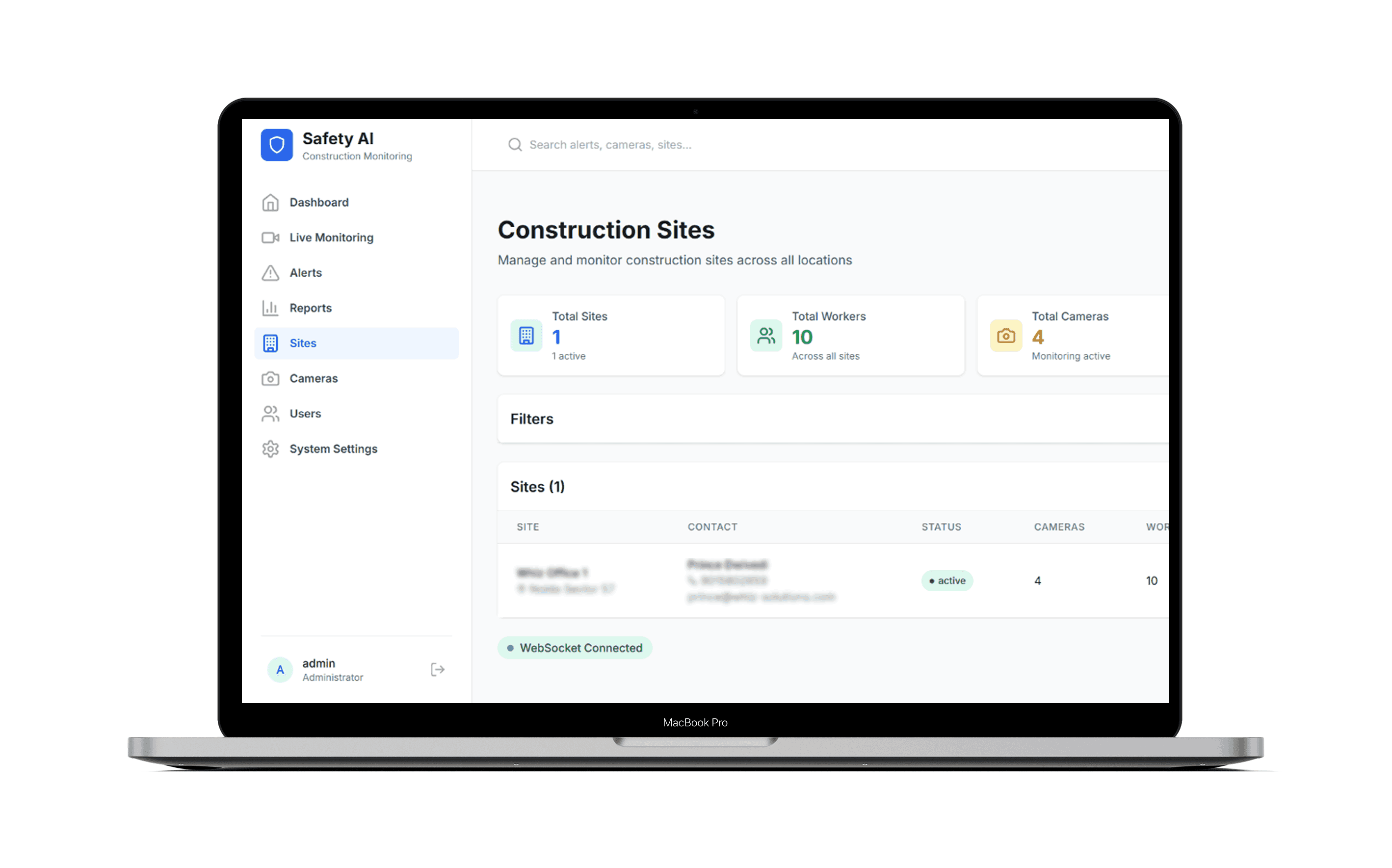
What safety officers see on the floor
What changed after launch
Detection latency under 500ms - Violations surface fast enough for officers to act while the risk is still unfolding.
60% fewer manual inspections - Continuous camera oversight replaced large portions of walkthrough-based checking.
PPE compliance from 70% to 95% - Real-time PPE alerts drove measurable improvement in on-site compliance behavior.
High-risk areas identified - Analytics highlighted recurring hazard zones so teams could focus prevention where it mattered most.
Multi-site monitoring ready - Role-based dashboards and camera management supported oversight across multiple locations.
Trusted alert workflow - Confidence scoring and multi-frame confirmation kept false positives low enough for operators to trust the system.
Challenges & Learnings
Lighting & occlusion
Varied site lighting and blocked views hurt accuracy — solved with targeted retraining.
Sensitivity vs false positives
Tuning detection thresholds was critical so officers would trust and act on alerts.
Network variation
Handled unstable connections with buffering and reconnect logic for live streams.
Hardware constraints
Delivered usable detection on standard web cameras without specialized site hardware.
Tight delivery window
Shipped a complete PoC demo in 4–6 weeks with a small cross-functional team.
Where the platform goes from here
Real-time PPE and proximity alerts changed how we supervise the site — issues surface in seconds instead of after the next walkthrough.
“WhizCloud delivered a practical computer vision safety stack under tight constraints: live detection, clear dashboards, and review workflows that safety officers can actually use day to day.”