Event Marketplace Platform — A Case Study
From fragmented bookings to a full event marketplace — unifying venue discovery, vendor booking, pricing negotiation, and event coordination for enterprise operators
TL;DR
We designed and delivered a multi-platform event marketplace, replacing scattered vendor coordination, opaque pricing, and offline booking chaos with a single, enterprise-grade digital platform. Using NestJS, a Flutter mobile app, and a web admin portal, organizers can discover venues and vendors, negotiate pricing, track bookings in real time, and manage full event coordination — while enterprise operators run their own catalogs, teams, and booking pipelines independently. The result: a 65% reduction in booking lead time, a 2.4× uplift in vendor onboarding post-launch, and 90% of admin operations now fully self-serve.
Problem Overview
Event booking was a coordination nightmare for everyone involved. Our client operated in a market where organizers hunted across dozens of websites for venues, chased vendors over phone calls for pricing, and had no structured way to track bookings from request to completion. On the operator side, there was no system — just spreadsheets, emails, and missed revenue.
- No centralised discovery — venues, caterers, photographers, and décor vendors each required separate research across disconnected websites and directories
- Opaque, negotiated pricing — pricing existed only in phone calls and WhatsApp threads, with no digital record, structured quote, or way to compare or approve
- No booking visibility — organizers had no real-time view of whether a booking was pending, confirmed, or in progress, making constant follow-up necessary
- No enterprise operations layer — multi-location operators managing dozens of venues had no way to run their own catalog, teams, or vendor relationships from a single system
- Booking and planning were disconnected — reserving a venue was separate from managing the event itself, with guest lists, tasks, budgets, and venue slots living in different tools
- Location-blind search — discovering nearby venues required manual map searches, with no mobile-native, distance-aware listing for on-the-go organizers
Role & Responsibilities
- Role: Full product, architecture, and engineering delivery partner
- Responsibilities:
- Design and build the full event marketplace — Flutter mobile app, web admin portal, and unified NestJS API
- Architect a multi-tenant platform supporting enterprise operators running independent catalogs on a single deployment
- Build the structured pricing and offer negotiation engine with full audit trail
- Develop the defined booking lifecycle state machine — pending, offer received, confirmed, completed
- Implement category-specific dynamic listing forms for venues and vendor types
- Build the real-time notification layer for booking status changes across both platforms
- Develop the integrated event planning layer — guests, tasks, and budget tracking tied to bookings
- Deliver cloud deployment, CI/CD, and ongoing platform ownership
Project Context
- Industry: Event management and hospitality — venue and vendor marketplace, B2B enterprise operator platform
- What we built: Consumer mobile app (Flutter), enterprise web admin portal, unified REST API (NestJS), real-time notification layer
- Purpose: Replace fragmented, manual event booking coordination with a single cohesive marketplace covering discovery, negotiation, booking, and full event planning for both organizers and operators
- Constraints: Multi-tenant architecture supporting independent operator catalogs and teams on shared infrastructure, category-specific listing data without custom builds per category, real-time booking status synchronisation across mobile and web, and a pricing negotiation workflow with a complete audit trail replacing informal phone and chat-based agreements
My Approach
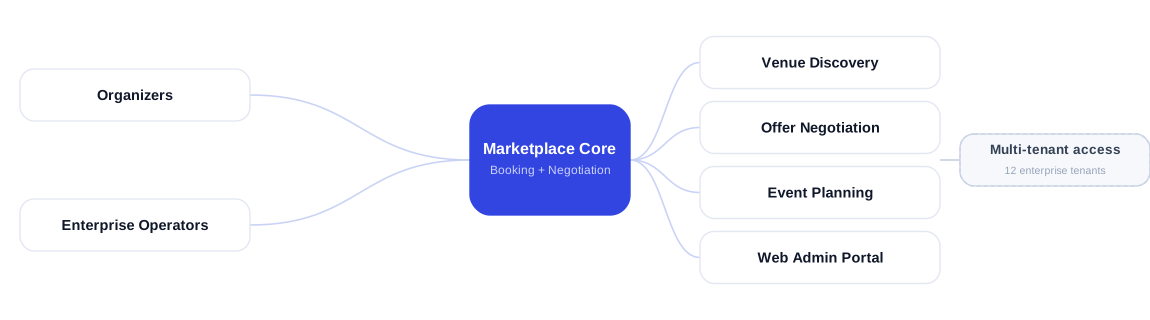
WhizCloud designed and built a complete event marketplace — not a collection of tools bolted together, but a single, cohesive platform where discovery, negotiation, booking, and event coordination all live in one experience. We approached this as a marketplace problem from day one, designing for both sides of the platform — organizer and operator — with equal care, since a marketplace only works when both halves are genuinely strong.
- Discovery: Mapped the full organizer and operator journey — from first browse to confirmed booking to post-booking event coordination — before any build work began
- Booking lifecycle first: Designed the defined booking state machine (pending → offer received → confirmed → completed) as the core domain model, since every other feature depends on it
- Dual-platform parity: Built the Flutter mobile app for organizers and the web admin portal for operators against the same NestJS API — no feature divergence between consumer and operator experiences
- Multi-tenant by design: Architected role-based data scoping from the start, so enterprise operators could run independent catalogs without custom deployments
Research & Insights
Key Findings from Discovery
- Organizers consistently described venue and vendor research as their biggest time sink — comparing options across multiple disconnected websites and directories
- Pricing negotiation happening entirely through phone calls and WhatsApp meant no party had a reliable record of what was agreed — a recurring source of disputes
- Multi-location operators had no way to see their own booking pipeline across venues — each location effectively ran its own informal process
- Organizers wanted booking and event planning connected — managing guests, tasks, and budget separately from the venue reservation created duplicate work
- Mobile-native, location-aware discovery was completely absent — organizers searching on the go had no way to find nearby options without manual map searching
Competitive Research
- Most venue discovery platforms offered listings without any structured booking or negotiation workflow — pricing still happened off-platform
- Few competitors served both organizer and operator sides with equally capable, purpose-built tools — most were directory-style products with no real operational layer
- Event planning tools (guest lists, budgets, tasks) were typically separate products entirely disconnected from venue booking platforms
User Persona
- Name: Aditi
- Role: Event organizer planning a corporate event
- Goals: Find and compare venues and vendors quickly by location and price, negotiate pricing transparently, track booking status without chasing anyone, manage the full event — guests, tasks, budget — in one place
- Pain Points: Researching across dozens of separate websites, no digital record of negotiated pricing, no visibility into whether a booking request had even been seen
Information Architecture
- Unified Marketplace Discovery — venues, caterers, photographers, and décor vendors searchable by location, category, price range, and availability with geo-aware sorting
- Structured Pricing & Offer Negotiation — requests, counter-offers, and final pricing handled entirely in-platform with full audit trail
- Booking Lifecycle — pending → offer received → confirmed → completed, with real-time push notifications on every status change
- Category-Specific Dynamic Listings — configurable forms capturing the right details per category (capacity, cuisine type, pitch specs, coverage duration) without custom builds
- Multi-Tenant Enterprise Operations — independent operator catalogs, teams, and booking pipelines with role-based access on shared infrastructure
- Integrated Event Planning — guest lists, task assignments, and budget category tracking tied to a specific venue reservation
- Trust & Social Proof — photo albums, ratings, verified reviews, and similar venue recommendations on every listing
- Web Admin Portal — venue and vendor catalog management, dynamic listing form builder, booking pipeline, offer management, user/team/role access, content management, multi-tenant scoping
Visual Language
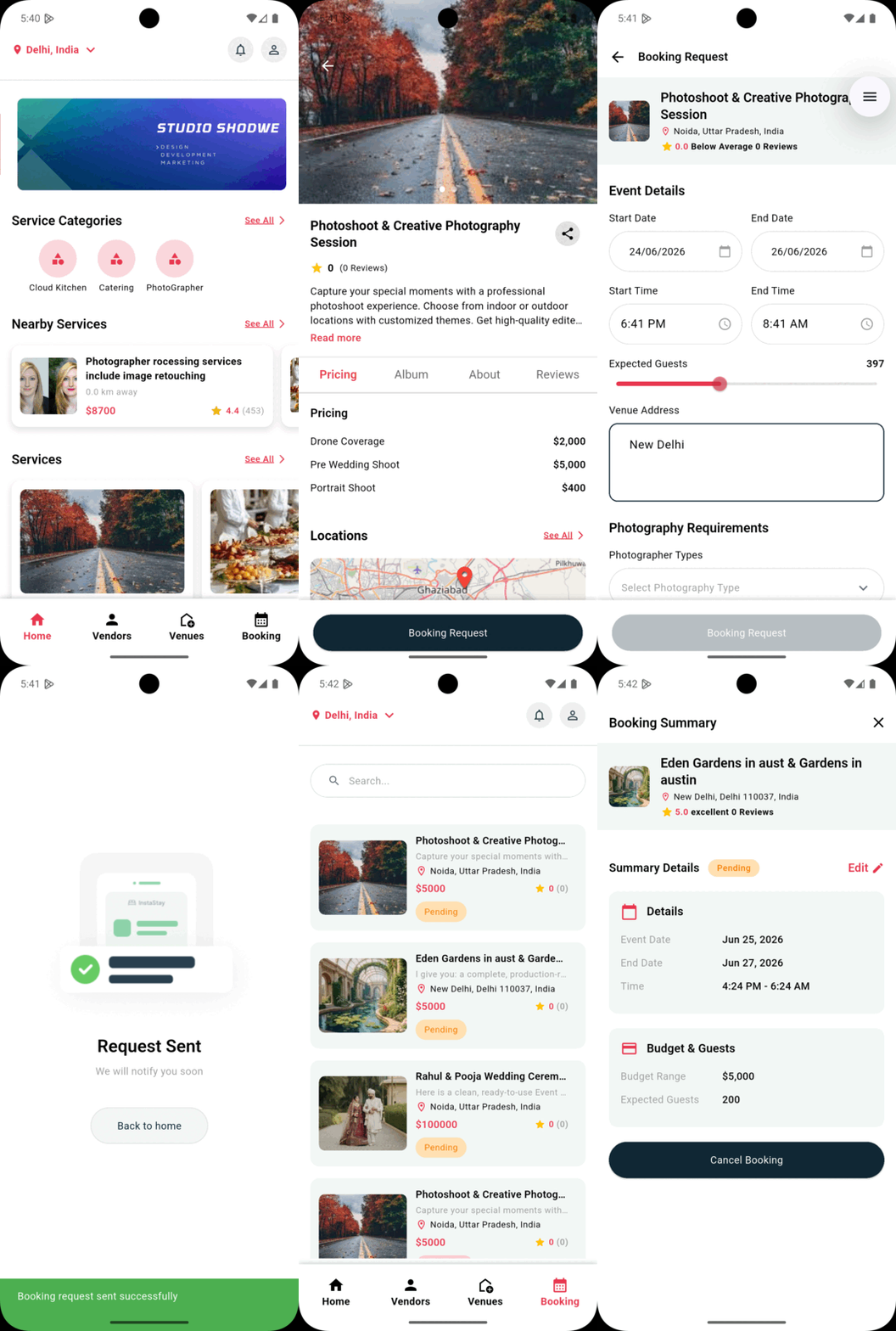
The platform deliberately separates two experiences built on the same API. The Flutter mobile app was designed for speed and clarity — fast browsing, rich photo galleries, and a booking flow that takes an organizer from first search to confirmed venue in minutes. The web admin portal prioritises operational density and control, giving enterprise operators a powerful, self-serve toolset for managing catalogs, bookings, and teams without ever needing developer involvement for day-to-day operations.
Wireframes & Early Ideas
Early wireframes focused on two flows — the organizer's venue discovery and booking request screen, and the operator's offer negotiation interface. The booking state machine went through several iterations to settle on four clear, unambiguous states that both sides could understand without explanation. The dynamic listing form builder was prototyped early to validate that wildly different venue and vendor types — a banquet hall versus a cricket ground — could be captured by the same configurable system without requiring a custom build per category.
Designing Solutions
Problem: No centralised way to discover venues and vendors by location, category, or price
- Built unified marketplace discovery covering venues, caterers, photographers, and décor vendors in one searchable catalog
- Geo-aware sorting surfaces the closest and most relevant options first, addressing the location-blind search problem directly
- The Flutter mobile app uses device GPS so organizers browsing on the go get contextually relevant, distance-sorted results with rich photo galleries and ratings
Problem: Pricing negotiation happened entirely offline with no record or structure
- Built a structured pricing and offer negotiation engine — admins and vendors submit offers, organizers accept or decline, all within the platform
- A full audit trail replaces phone calls and WhatsApp threads, giving both sides a reliable record of what was agreed
- Every booking carries a defined status — pending, confirmed, completed, cancelled — with push notifications keeping both sides informed the moment anything changes
Problem: Multi-location operators had no system to run their own catalog, teams, or bookings
- Built multi-tenant enterprise operations so operators run their own venue and vendor catalogs, user teams, and booking pipelines within the shared platform
- Role-based access ensures each operator sees only their own data, with no custom deployment required per enterprise client
- The web admin portal gives operations teams full control over listings, bookings, vendors, quotations, and content — independently, without developer involvement
Problem: Booking and event planning lived in completely disconnected tools
- Built integrated event planning so organizers create events with guest lists, task assignments, and budget category tracking — all tied to a specific venue reservation
- One platform now covers the full coordination lifecycle of an event, not just the booking moment
- Category-specific dynamic listing forms ensure every venue or vendor type captures exactly the right details without a custom build for each category
Tech & Implementation
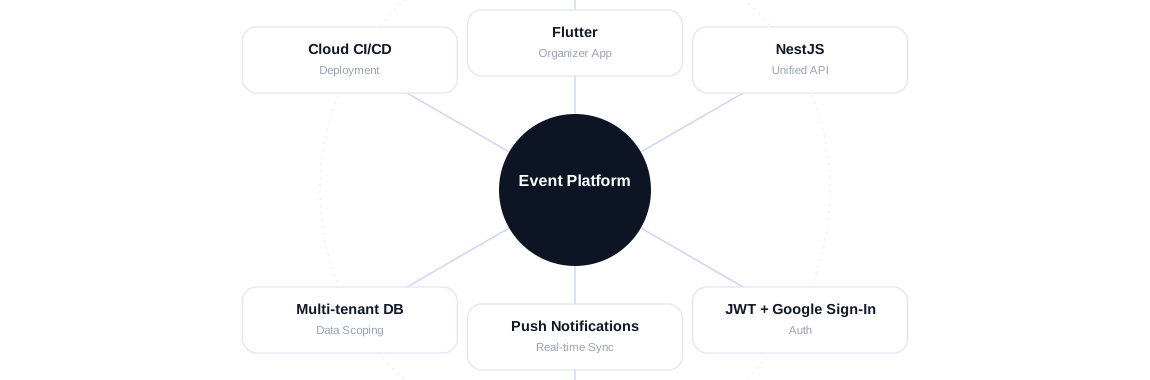
- Mobile: Flutter — consumer-facing organizer app with GPS-aware discovery, in-app booking and offer review, and real-time push notifications
- Web: Enterprise web admin portal — catalog management, dynamic listing form builder, booking pipeline, offer and quotation tools, content management
- Backend: NestJS — unified REST API powering both mobile and web with no feature divergence
- Authentication: JWT authentication, Google Sign-In, and biometric authentication on mobile; role-based access control across the admin portal
- Architecture: Multi-tenant data scoping — enterprise operators run independent catalogs on a single deployment
- Notifications: Real-time push notification layer synchronising booking status across mobile and web instantly
- Infrastructure: Managed cloud deployment with CI/CD pipelines and ongoing platform ownership
Real-world Features & Highlights
- Unified marketplace discovery → venues, caterers, photographers, and décor vendors searchable by location, category, price, and availability
- Structured pricing & negotiation → requests, counter-offers, and final pricing handled entirely in-platform with full audit trail
- Real-time status & notifications → defined booking states with instant push updates on every change
- Category-specific dynamic listings → configurable forms for any venue or vendor type without custom builds
- Multi-tenant enterprise operations → independent operator catalogs, teams, and pipelines on shared infrastructure
- Location-aware mobile experience → GPS-based discovery with photo galleries and ratings for on-the-go organizers
- Defined booking lifecycle → pending → offer received → confirmed → completed, with zero ambiguity for either side
- Trust-building venue profiles → photo albums, ratings, verified reviews, and similar venue recommendations
- Integrated event planning → guest lists, tasks, and budget tracking tied directly to the venue reservation
- Dual-surface design → purpose-built Flutter app for organizers and web admin portal for operators, one shared API
Results & Impact
- 65% reduction in booking lead time from discovery to confirmation
- 2.4× increase in vendor onboarding rate in the first quarter post-launch
- 8 manual coordination touchpoints eliminated per booking
- 100% of pricing, offers, and booking decisions now happen inside the platform — zero offline coordination required
- 12 enterprise tenants running independent catalogs on a single deployment
- 90% of admin operations are now fully self-serve — zero developer interventions required to add new venue categories or content
Challenges & Learnings
- Designing for two audiences simultaneously — building the organizer mobile app and the operator admin portal with equal care required treating both as primary products, not one as a feature of the other
- Dynamic listing flexibility — supporting wildly different venue and vendor categories (a banquet hall versus a cricket ground) through one configurable form system required careful schema design rather than hardcoded category logic
- Negotiation state complexity — the offer and counter-offer workflow had more edge cases than expected (expired offers, multiple rounds, partial acceptance) and required disciplined state machine design
- Multi-tenant data isolation — ensuring enterprise operators could never see another operator's data while sharing the same infrastructure required rigorous role-based scoping enforced at the API level, not just the UI
- Real-time synchronisation — keeping booking status consistent and instantly visible across mobile and web required careful event-driven notification design
Takeaways
- Marketplaces need equally strong sides: A marketplace only works when both the organizer-facing and operator-facing experiences are genuinely excellent — under-investing in either side undermines the whole platform
- Structure beats informality in pricing: Moving pricing negotiation from phone calls and chat threads into a structured, audited workflow eliminated disputes and gave both sides confidence in what was actually agreed
- Dynamic configuration scales better than custom builds: The category-specific dynamic listing system meant new venue and vendor types could be added through configuration, not code — a foundational decision that paid off repeatedly
- Booking and planning belong together: Connecting event planning (guests, tasks, budget) directly to the booking reservation turned a single transaction into an ongoing relationship with the platform
- Multi-tenancy unlocks enterprise scale: Building role-based, multi-tenant architecture from day one meant onboarding new enterprise operators required zero custom deployment — that scalability was a direct revenue enabler
Next Steps
- Advanced analytics dashboards for operators — booking conversion, revenue per listing, and demand trends by category and region
- AI-powered venue and vendor recommendations based on organizer browsing and booking history
- Expanded payment integration — in-app payment processing for deposits and final settlements
- Review and rating system enhancements — verified post-event review flows tied to completed bookings
- Multi-language and multi-currency support for expansion into new regions
- Deeper vendor-side tooling — dedicated vendor portal for catering, photography, and décor partners
Client Feedback
"WhizCloud didn't just build us a booking tool — they built us a marketplace. The admin portal means our team manages the entire platform independently. The mobile app our customers use actually converts. That combination is rare."
— Client, A Leading Event Marketplace (Marketplace & Hospitality Sector)
Call to Action
Whether you are digitising an existing booking business, launching a multi-vendor marketplace, or building an enterprise operations platform, contact us at WhizCloud — we'd love to partner with you.